The arithmetic is exact; which date counts as starting is up to the workplace - contract date, first shift or something else. The tool does not guess that for you.
How the arithmetic works
Whole years first: the number of full anniversaries between the two dates. Then whole months past that anniversary, then the days left over. It's the same count a payroll system does, and it never rounds a partial month up - twenty-nine years and eleven months is not thirty, however close the party is to the date.
What to do with the number
On the name print, the years of service is one typed line of up to twenty characters, so the tool hands back the line in a form that fits: "32 years, 4 months" is twelve characters; "32 years" is eight. Longer is possible, but the line that reads best on the print is usually the shorter one.
If the number is heading for a speech, not a print, the send-off guide covers the party, the cards and the words around it; what to write in a retirement card takes the short version.
Why we do not round
A career of 29 years and 11 months is nearly thirty, and plenty of speeches say so. The print is different: it's a record, it hangs on a wall for years, and the whole point of the four typed lines is that each one states a fact. The tool gives you the exact figure; whether the speech rounds it up is between the speaker and the room.
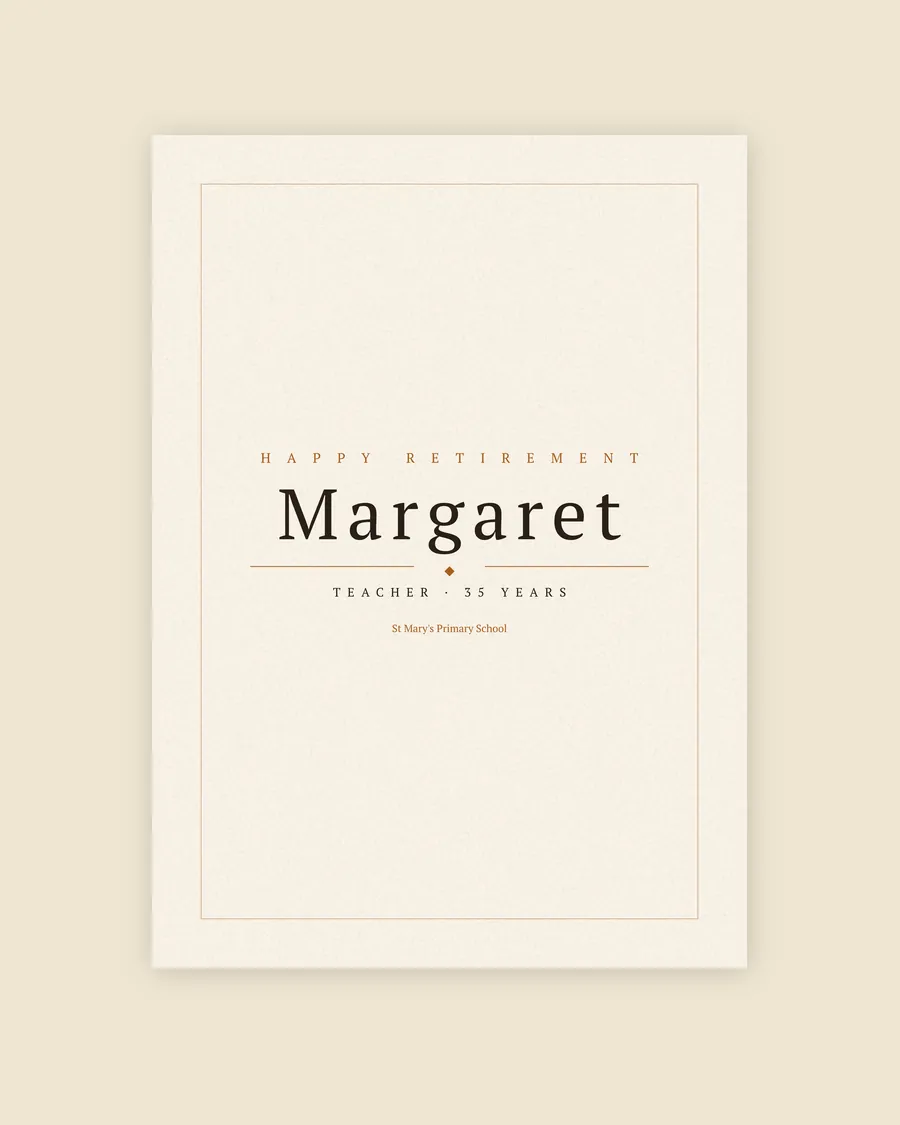 The Personalised Name Print From £15.99